
India’s iron and steel industry is a major global player, likely the second-largest steel producer.
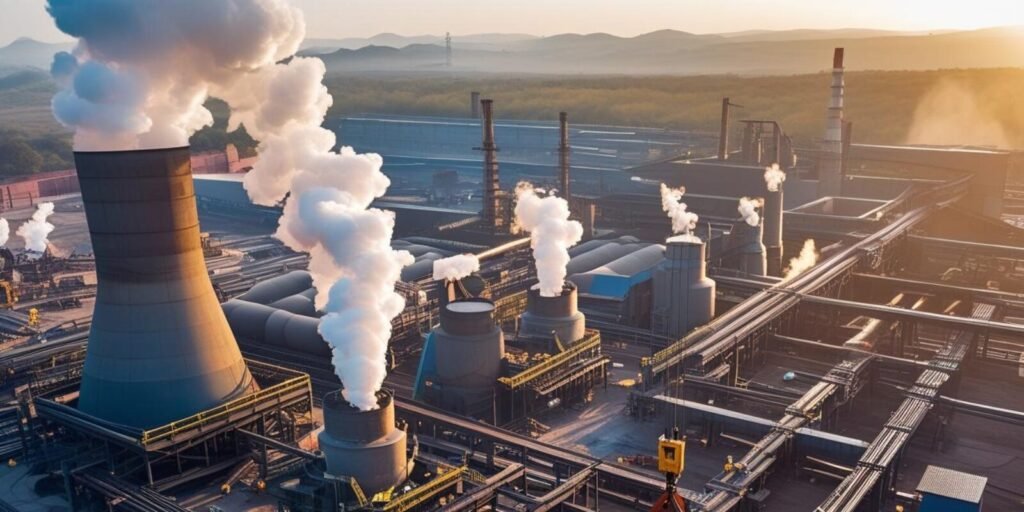
Overview
India’s iron and steel industry is a vital part of the economy, playing a significant role in global steel production. It supports essential sectors and is backed by government initiatives, but faces some challenges.
Production and Growth
The industry has shown steady growth, with production capacity reaching over 171 million tonnes in FY24. Projections suggest it could hit 500 million tonnes by 2034, driven by domestic demand and infrastructure development.
Economic Impact
Contributing about 2% to GDP, the industry is crucial for infrastructure, real estate, and automobiles. The availability of raw materials and cost-effective labor has likely boosted its growth.
Future Outlook
Government policies, like the Production Linked Incentive (PLI) scheme, seem to be supporting expansion. However, issues like high logistics costs are noted, with efforts underway to address them through policies like the Steel Scrap Recycling Policy.
Detailed Analysis
India’s iron and steel industry stands as a cornerstone of the nation’s economic landscape, emerging as a global powerhouse with significant implications for growth, employment, and infrastructure development. This report delves into the industry’s current status, economic contributions, production trends, and future projections, providing a comprehensive overview as of June 11, 2025.
Industry Overview and Global Standing
As of recent data, India is recognized as the second-largest steel producer globally, a position it has maintained through consistent growth in production capacity. In FY24, the industry’s capacity was reported at over 171 million tonnes, up from 161.3 million tonnes in FY23, reflecting a robust expansion Indian Steel Industry Report | IBEF. This growth is driven by domestic demand and strategic government policies, positioning India as a key player in the global steel market.
The industry’s significance is further highlighted by its contribution to approximately 2% of India’s Gross Domestic Product (GDP), underscoring its role in supporting critical sectors such as infrastructure, real estate, and automobiles. The availability of raw materials like iron ore, coupled with cost-effective labor, has been instrumental in sustaining this growth, particularly in regions like Durgapur, West Bengal Steel Sector in India | Vision IAS.
Production and Growth Trends
Production figures indicate a steady upward trajectory, with crude steel production reaching 126.3 million tonnes in FY23 and finished steel at 122.3 million tonnes, growing at compound annual growth rates (CAGR) of 3.3% and 4.8%, respectively, over the past five years. By FY24, production is estimated to have grown further, with forecasts suggesting a 6% year-on-year increase to 152 million tonnes by March 2025 India’s steel industry to add about 23 million tons of capacity in the coming years – Nomura. This growth, despite global challenges like the Russia-Ukraine war and inflationary pressures, showcases the industry’s resilience.
The National Steel Policy 2017 initially set a target of 300 million tonnes by FY31, but recent announcements have escalated ambitions, with the government now aiming for 500 million tonnes by 2034 Indian Steel Industry: 300 MT Production Target by 2030-31. This ambitious target is supported by new steel manufacturing units expected to add 40 million tonnes per year by 2025-26, with 65% utilizing the BF-BOF process and 35% relying on EAF and IF processes.
Economic Contribution and Sectoral Importance
The industry’s economic footprint is substantial, contributing around 2% to GDP and serving as a backbone for infrastructure development, real estate, and the automobile sector. Domestic demand, fueled by government investments in projects like the Pradhan Mantri Awas Yojana and Gati Shakti Master Plan, is a major driver Increased Steel Demand in India in 2025- Factors, Impact & Challeges – ICICIdirect. Rising urbanization and a shift towards metal-intensive construction further amplify steel consumption, with per capita consumption expected to rise significantly from 81.1 kg in FY23 to potentially 160 kg by 2030-31 Indian Steel Industry Report | IBEF.
Major Players and Financial Performance
Key players such as Tata Steel, JSW Steel, and Hindalco are at the forefront, driving innovation and expansion. Financial performance in FY24 showed mixed results, with JSW Steel reporting a 3.99% increase in sales and significant jumps in operating profit (49.36%) and net profit (120.95%), attributed to value-added products and higher exports. Conversely, Tata Steel faced a 6.60% decline in sales and drops in operating profit and net profit, impacted by weak demand and rising input costs India Steel Market Size & Share Analysis – Industry Research Report – Growth Trends. Other companies like Hindustan Zinc and Vedanta also experienced varied financial outcomes, reflecting the industry’s diverse challenges and opportunities.
Export Potential and Market Dynamics
India’s steel exports, while impacted by geopolitical tensions and government policies, show potential for growth, with exports in April-December 2024 standing at 3.60 million tonnes compared to 7.28 million tonnes imported Indian Steel Industry Report | IBEF. The Domestically Manufactured Iron and Steel Products (DMISP) Policy 2025 prioritizes local procurement, aiming to reduce reliance on imports and enhance domestic manufacturing indian steel sector: Latest News & Videos, Photos about indian steel sector | The Economic Times.
Industry Outlook and Government Initiatives
The outlook for the industry remains cautiously optimistic, with steel consumption projected to grow by 8-9% in 2025, driven by demand from construction, real estate, railways, and consumer durables Increased Steel Demand in India in 2025- Factors, Impact & Challeges – ICICIdirect. By FY26, consumption is expected to reach 151-155 million tonnes, with a CAGR of 7-8%. Government initiatives, including a significant increase in capital expenditure for infrastructure in the Union Budget 2023-24 and the PLI scheme for specialty steel, are expected to boost domestic demand India’s Steel Production: A Global Leader in Iron & Steel Industry Growth.
However, challenges such as high logistics costs due to a reliance on road transport and infrastructure constraints persist. The government is addressing these through policies like the Steel Scrap Recycling Policy and measures to ensure raw material security, aiming to enhance sustainability and efficiency India Iron Steel Market Size, Share & Industry Report 2034.
Comparative Analysis of Key Metrics
To illustrate the industry’s growth and projections, the following table summarizes key metrics:
Metric FY23 FY24 (Estimated) Projection (2030-34)
Production Capacity (MT) 161.3 171 300-500
Crude Steel Production (MT) 126.3 ~152 (by Mar 2025) –
Finished Steel Consumption (MT) 120 – 230 (by 2030)
Per Capita Consumption (kg) 81.1 – 160 (by 2030-31)
Demand Growth Rate (%) – – 8-9% (2025)
This table highlights the industry’s trajectory, emphasizing the ambitious targets and expected growth rates.
Conclusion
India’s iron and steel industry is poised for significant growth, leveraging domestic demand, government support, and strategic policies. While challenges like logistics and raw material availability remain, ongoing efforts to address these issues suggest a promising future. The sector is set to play a pivotal role in shaping India’s economic landscape, contributing to infrastructure development and global competitiveness.
Comments